
A Brief Geology of Maroon Lake
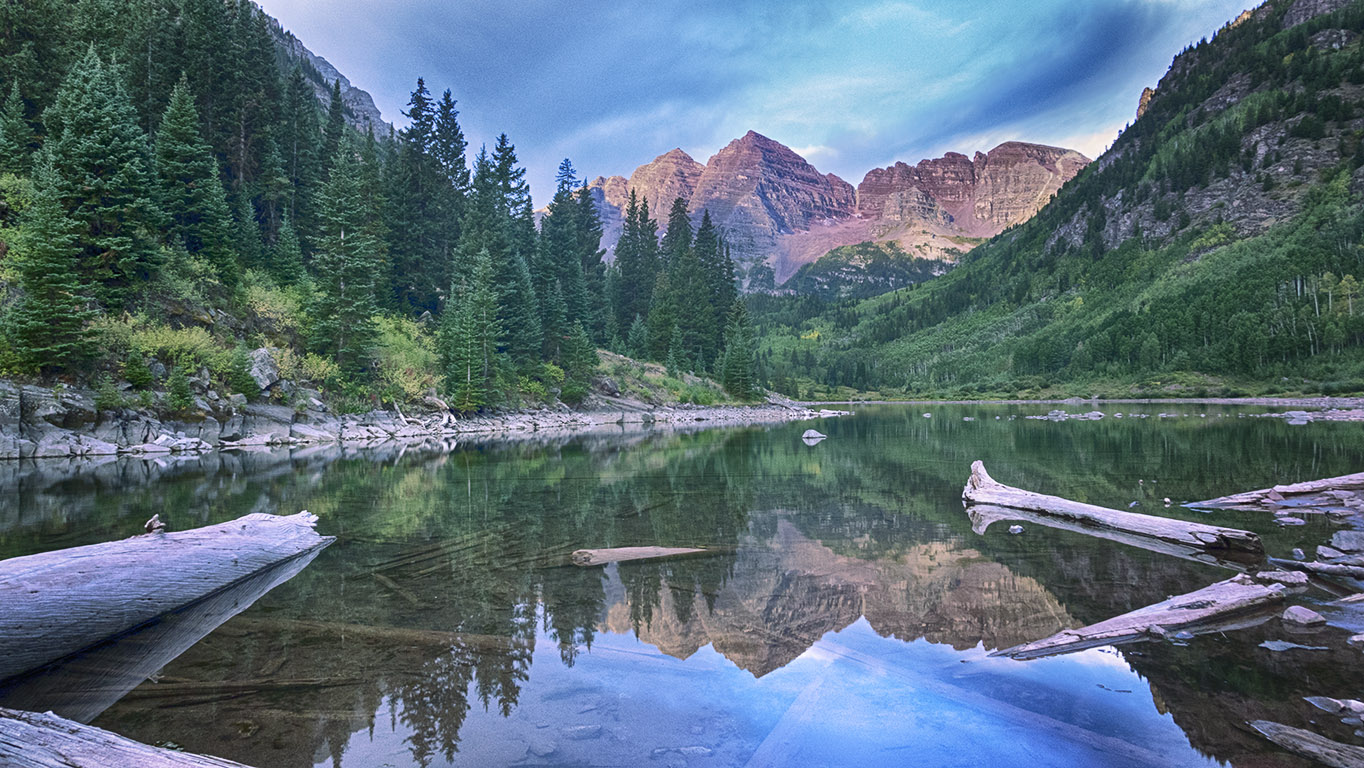
The Maroon Bells are not, technically, the most photogenic peaks in Colorado. They are the most photographed because they are exactly the right distance from a reflecting pond — about eleven hundred yards — and because the pond is at the end of a paved road. Convenience makes celebrities of mountains, as it does of people.
But the geology of the Bells is more interesting than their celebrity. The maroon color is hematite-rich Maroon Formation mudstone, deposited about three hundred million years ago in shallow seas at the foot of an ancestral range. The rock is famously fragile — climbers call it 'rotten' — and the talus fields below the peaks are, in effect, the mountains slowly returning to the lake.
I photograph the lake when no one is there. This is rarer than you would think. Even at three in the morning in February it is not uncommon to find one or two tripods already planted. They are usually pointed in the same direction. I tend to turn around and photograph the other shore.